databending
also: hex editingsonification
Corrupting a digital file on purpose — editing its raw bytes or running it through software meant for other media — so that it breaks in revealing ways when it is read back.
how it works
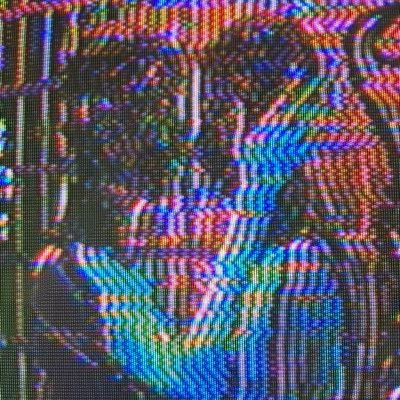
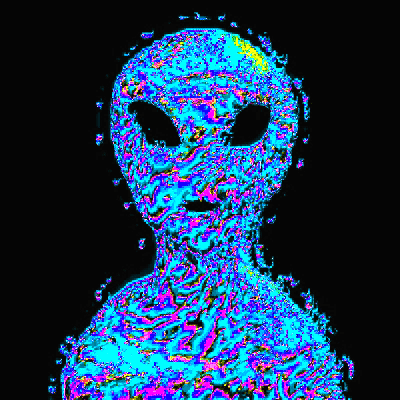
Databending treats a file as raw material rather than a finished picture. Artists open an image in a text or hex editor and change, delete or repeat bytes; import it into audio software as if it were sound and apply echo, reverb or filters; or feed it to programs never meant to read it. When the file is decoded again as an image, the damage shows up as shifted colour, repeated bands and torn rows of pixels.
Because every file format stores data differently, the same edit looks completely different in a BMP, a JPEG or a PNG. Learning those structures — headers, scanlines, compression blocks — is part of the craft.
context
The name borrows from circuit bending, its hardware cousin. Databending spread through online glitch communities in the 2000s alongside related techniques such as datamoshing and pixel sorting, and became one of the most widely taught entry points into glitch art.
further reading
at protocol decay